What Size Solar Generator Do You Really Need?
Choosing the right solar generator size can be a game-changer for powering your devices during camping trips, RV adventures, and home backup needs. Too big, and you overspend; too small, and you risk power outages. The right size ensures efficiency and cost-effectiveness. Understanding your actual power needs helps match you with the best solar generator to suit your lifestyle. Several factors influence this choice, including the devices you plan to power, their wattage requirements, and usage duration. This guide will empower you to make an informed decision, avoiding unnecessary expenses while ensuring reliability. From small-scale applications like charging phones and laptops to larger setups for home appliances, the choice depends largely on the scenario. With innovations like Anker SOLIX’s scalable solutions, you can expand capacity as your needs grow, ensuring long-term flexibility. Dive into specific setups to understand how they translate into everyday use, optimizing for both practicality and efficiency.
Step One — Understand Your Real Power Needs
Knowing your real power needs is fundamental when choosing a solar generator. Avoid guessing; instead, take stock of what you plan to power. Consider everything—electronics, tools, and appliances—whether you’re setting up for camping, emergencies, or off-grid living. Each device has specific power demands, influencing your generator choice.
List the Devices You Want to Power
Begin by listing all devices you plan to run on your solar generator. Common camping needs might include a phone, flashlight, and laptop. For RVs, think broader with fridges, microwaves, and HVAC systems. Home backup setups will likely involve essential appliances, such as refrigerators, medical devices, or lighting. By categorizing your devices this way, you can visualize your aggregate power requirements, setting the foundation for choosing the right generator.
Check Wattage, Surge Power, and Daily Usage
Next, research each device’s wattage, surge power, and typical daily usage. Device labels usually display wattage, illustrating energy requirements for operation. Surge power covers initial spikes on startup, crucial for larger appliances. Consider daily usage hours—some equipment runs constantly, while others operate sporadically. Factor these elements into your calculations to pinpoint exact generator requirements.
Matching Solar Generator Size to Real-Life Scenarios
Navigating various scenarios to match generator size helps optimize your power plan. Different environments, like camping, RV usage, or home backups, demand different energy solutions.
Small Power Needs — Camping, Phones, and Laptops
For camping or minimal setups, small solar powered generators suffice. Ideal for powering phones, laptops, and LED lights, these compact systems are portable and efficient. Their light weight makes them easy to transport, ensuring convenience during travel. Opt for generator models offering modest wattage and quick recharge times for optimal functionality in outdoor settings.
Medium Power Needs — RVs, Outdoor Work, and Emergency Kits
Medium power scenarios cover RVs, outdoor work, and emergency equipment. Generators here need robust capacity to run items like refrigerators, microwave ovens, or power tools. Reliability and versatility matter—choose units that recharge quickly under diverse conditions. Prioritize systems offering expandability, allowing power scale adjustments as needs evolve.
High Power Needs — Home Backup and Essential Appliances
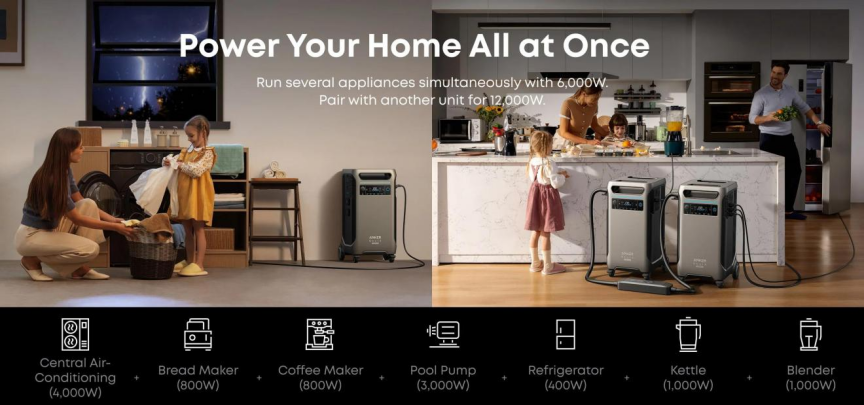
High power demands include setups for home backup, powering essential appliances through prolonged outages. Here, substantial battery capacity and scalability are vital. Consider the Anker SOLIX F3800 Plus Solar Generator, starting at 3.84kWh and expandable up to 53.8kWh. It supports heavy-duty applications like central AC and fridge systems, ensuring comprehensive coverage.
Choosing the Right Solar Generator Capacity and Brand
Deep diving into solar generator capacities and brands enables smart purchasing decisions. Prioritizing certain key features ensures product longevity and reliability.
Battery Capacity Explained — Wh, Output, and Expandability
Battery capacity fundamentally impacts operational capability. Expressed in watt-hours (Wh), it reflects stored energy levels. Higher capacities allow more prolonged device support, crucial in extended outage scenarios. Consider units with flexible output options—dual voltage outputs offer expanded compatibility. Expandability allows for increased battery additions over time, providing adaptable future-proofing.
Comparing Popular Anker SOLIX Solar Generator Options
The Anker SOLIX F3800 Plus Solar Generator stands as a noteworthy option. With features like 240V bypass charging for fast/reliable recharges or expansions up to 53.8kWh, it caters to diverse power requirements. Innovative tech, such as EV-grade batteries, guarantees long-term savings. Its remote control via Anker app highlights smart management, adding convenience. With direct EV/RV charging capabilities, Anker offers versatile, powerful solutions for most scenarios.
Conclusion
Choosing a solar generator size that fits your needs doesn’t have to be daunting. With insights into device power requirements, clear scenario matching, and smart brand considerations, you can identify an optimal solution. Anker SOLIX serves as a prime example with expandable options tailorable to your lifestyle needs. Prioritizing informed decisions, deep considerations for each situation keeps costs and efficiency balanced. With a well-chosen solar generator, expect seamless operations, effective long-term investments, and adaptability to changing energy needs. Let your new solar generator pave the way to confident, sustainable living and energy independence.